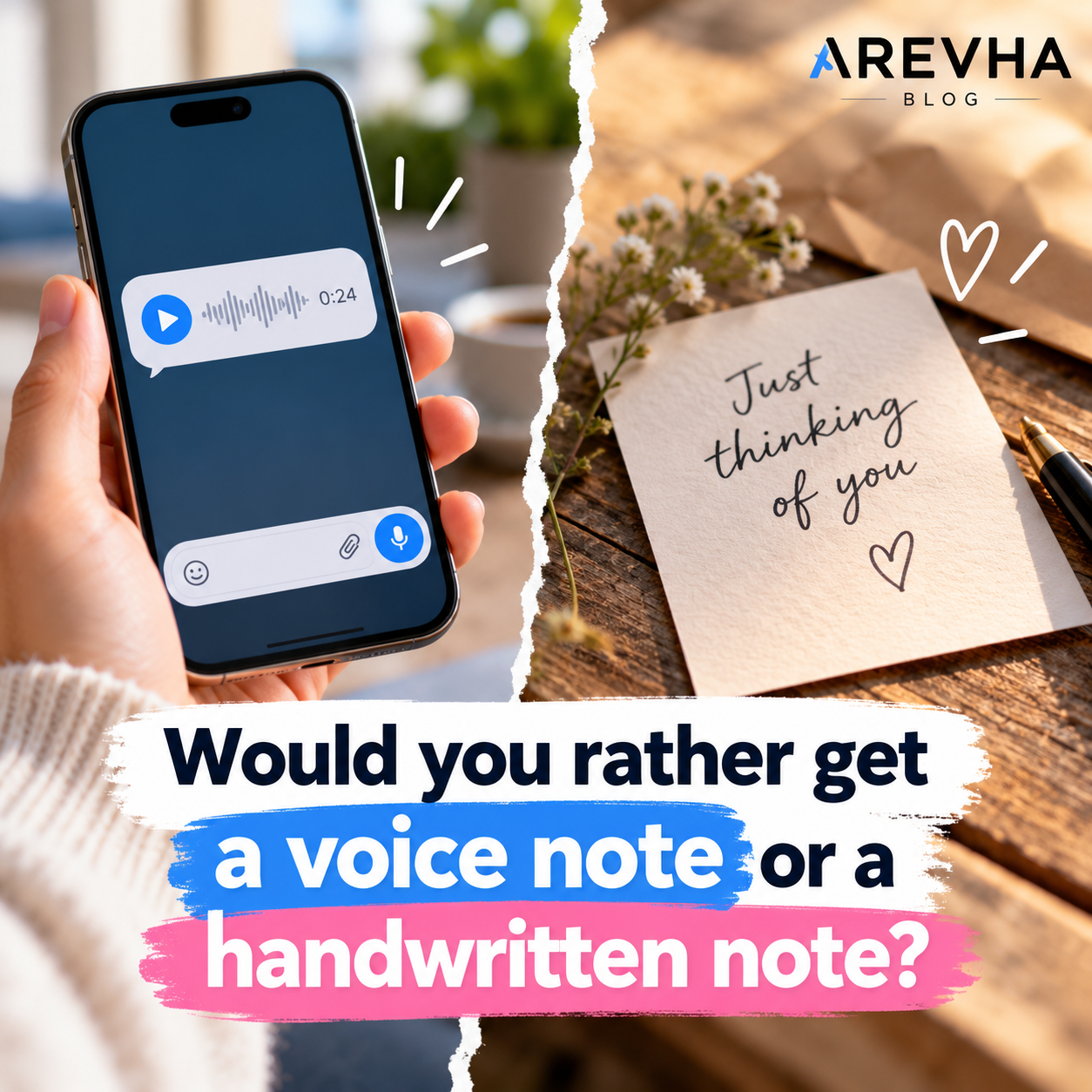
Imagine getting two messages from someone you like. One is a short voice note: you hear their laughter, their warmth, and the little pauses that make them unmistakably themselves. The other is a handwritten card: a few thoughtful words on paper, made just for you. Which would mean more?
There is no universal winner. A voice note brings someone closer in the moment, while a handwritten note can become a keepsake. Both can feel surprisingly intimate in a world where most communication happens through screens.
The charm of a voice note
Text can leave tone open to interpretation. A voice message adds rhythm, emotion and personality. Hearing someone say “I was thinking about you” can feel different from reading the same words, especially when their voice carries a smile. Voice notes also fit into everyday life: a quick hello during a lunch break or a story told while walking home.
But not everyone loves receiving audio. Some people are at work, in public or simply prefer reading at their own pace. A considerate sender keeps the message reasonably short and doesn't expect an immediate listen or reply.
Why handwritten notes still matter
Handwriting takes deliberate effort. You choose the card, find a pen, put your thoughts into words and give the note to someone. That tangible gesture can make even a simple message feel special. A handwritten note can be tucked into a book, pinned to a wall or rediscovered years later.
It doesn't need to be poetic. “I had a wonderful time with you yesterday” or “This reminded me of you” is enough when it feels genuine. The appeal is often the attention behind the words rather than beautiful penmanship.
Which one feels more romantic?
It depends on the person and the moment. A voice note can be perfect when you miss someone and want to feel close despite the distance. A handwritten note can be especially meaningful for an anniversary, a thank-you or an unexpected gesture. Some people love spontaneity; others treasure objects they can hold onto.
Rather than assuming what is romantic, pay attention to what the other person enjoys. If they replay funny audio messages, a voice note may make them smile. If they save concert tickets and birthday cards, a handwritten note might touch them more deeply.
How to make either one memorable
Specificity matters more than length. Instead of a generic “miss you,” mention the café where you laughed together, the song they recommended or a tiny detail you remembered. Keep the tone natural, avoid putting pressure on the recipient and let the message stand on its own.
For a voice note, try something simple: “I walked past that little bakery we talked about and thought of you. Hope your day is going well.” For a handwritten card: “I still smile when I remember our conversation. Here's to more unexpected adventures.”
Maybe the best answer is both
A spontaneous voice message today and a small handwritten card next time you meet can complement each other beautifully. One captures a fleeting moment; the other leaves something lasting. Neither format guarantees a connection, but both create an opportunity to show care in your own way.
So, would you rather hear someone's voice or hold their words in your hands? The most attractive choice might simply be the one that shows they were really thinking about you.